
Vanilla Ice is one of the most recognizable names to emerge from early 1990s pop culture, and decades later he remains a fixture in American entertainment. Born Robert Matthew Van Winkle, he became a global sensation with a single song, weathered a dramatic fall from grace, and then reinvented himself in an industry far removed from music. This article traces the complete journey of Vanilla Ice, exploring his childhood, his meteoric rise, the controversies that followed him, and the surprising second act that has kept his name relevant well into 2026. Whether you know him as the rapper behind “Ice Ice Baby” or as the host of “The Vanilla Ice Project,” his story is a fascinating case study in reinvention.
Who Is Vanilla Ice? A Quick Overview
Vanilla Ice, whose legal name is Robert Matthew Van Winkle, is an American rapper, actor, and television personality. He is widely credited as being <cite index=”14-1″>the first solo white rapper to achieve commercial success</cite>, a breakthrough that came with the release of his signature single in 1990. Beyond music, Vanilla Ice has built a diverse career spanning film, reality television, and home renovation. Today, he is just as well known for flipping luxury properties in Florida as he is for the song that made him famous over three decades ago. His story blends chart-topping fame, public backlash, and a remarkable financial comeback that few of his 1990s peers have matched.
Early Life: Robert Van Winkle’s Childhood in Dallas and Miami
Robert Matthew Van Winkle was <cite index=”14-2″>born in Dallas, Texas, on October 31, 1967</cite>. His early home life was far from stable. <cite index=”14-2″>He never knew his biological father and was given the surname of the man his mother was married to at the time of his birth</cite>. <cite index=”14-2″>When Van Winkle was four years old, his mother divorced, and the family began moving frequently between Dallas and Miami</cite> because <cite index=”14-2″>his new stepfather worked at a car dealership</cite>. This constant relocation exposed young Robert to different environments and communities, ultimately shaping the cultural influences that would define his future career in music and performance.
Discovering Hip-Hop and Breakdancing
Hip-hop culture captivated Robert Van Winkle from an early age. <cite index=”14-2″>He described it as a major passion, tied closely to his love of poetry, and said the movement heavily influenced who he became</cite>. <cite index=”14-2″>Between the ages of 13 and 14, he practiced breakdancing</cite>, immersing himself in local dance battles. It was during this period that <cite index=”14-2″>his friends nicknamed him “Vanilla,” since he was the only member of the group who was not Black</cite>. <cite index=”14-2″>Although he initially disliked the label, it eventually stuck</cite>, laying the groundwork for the stage name that would soon become internationally famous.
From Motocross to the Nightclub Stage
Before music took over, Van Winkle pursued an entirely different passion. According to Celebrity Net Worth, <cite index=”16-3″>he briefly chased a career in motocross racing after high school, winning three championships before a serious ankle injury ended that path</cite>. While recovering, <cite index=”16-3″>he returned to music, dancing, and beatboxing, eventually becoming a regular performer at a Dallas nightclub called City Lights</cite>. At this venue, <cite index=”16-3″>he opened for major acts including N.W.A., Public Enemy, 2 Live Crew, Tone Loc, and Paula Abdul</cite>. In a frightening turn of events, <cite index=”16-3″>Van Winkle survived being stabbed multiple times outside the club during a fight in 1987, spending ten days in the hospital before returning to performing</cite>.
The Rise of Vanilla Ice: “Ice Ice Baby” and Global Stardom
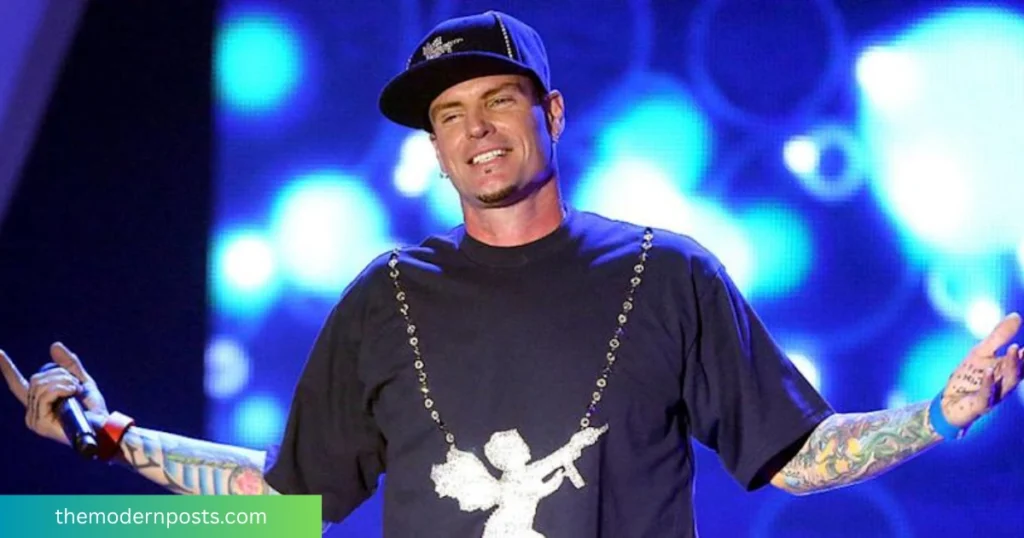
Vanilla Ice’s breakthrough arrived with the release of his debut single in 1990. <cite index=”14-1″>His debut album, “Hooked,” was released on independent label Ichiban Records before he signed with SBK Records, a division of EMI Group, which reissued the project under the title “To the Extreme”</cite>. That reissue became a phenomenon: <cite index=”14-1″>it turned into the fastest-selling hip-hop album of all time, and “Ice Ice Baby” became the first hip-hop single to top the Billboard Hot 100</cite>. The track famously sampled the bassline from David Bowie and Queen’s “Under Pressure,” and reports indicate Van Winkle later paid Queen millions in licensing compensation for the use.
Breaking Barriers in Hip-Hop
Vanilla Ice’s commercial success carried cultural weight beyond record sales. <cite index=”14-1″>He is credited with breaking down racial barriers in rap and hip-hop for future white rappers, most notably Eminem</cite>. At a time when hip-hop was still establishing itself in mainstream American culture, his crossover appeal introduced the genre to audiences who might not otherwise have engaged with it. This legacy is often cited by music historians when discussing the evolution of hip-hop’s mainstream acceptance during the early 1990s.
Film Appearances and “Cool as Ice”
Riding the wave of his musical success, Van Winkle moved into acting. He made a memorable cameo performing “Ninja Rap” in Teenage Mutant Ninja Turtles II: The Secret of the Ooze in 1991, a moment that remains a nostalgic touchstone for millennials. He also starred in the film Cool as Ice, intended to capitalize on his popularity. However, the movie’s release was poorly timed. By the time it hit theaters in the fall of 1990, his star had already begun to fade, and the film was widely panned by critics, marking an early sign of the swift public backlash that would soon follow.
Controversy and the Fall From Fame
The early 1990s were turbulent for Vanilla Ice. His rapid rise triggered intense scrutiny, including public disputes over the authenticity of parts of his backstory. He also faced legal trouble during this period; in 1991, he was arrested and charged alongside his bodyguard for carrying firearms in Los Angeles. Combined with mounting skepticism from hip-hop purists about his credibility as an artist, these controversies contributed to a rapid decline in his mainstream popularity by the mid-1990s, transforming him almost overnight from a chart-topping star into a punchline in pop culture commentary.
Reinventing His Sound
Rather than disappearing from the industry, Robert Van Winkle spent the following decade experimenting with new musical directions. He moved away from his early pop-rap sound and explored rap-rock and nu-metal styles, seeking credibility with a different audience. While these projects never matched the commercial heights of “Ice Ice Baby,” they demonstrated his willingness to evolve artistically rather than rely solely on nostalgia, a trait that would later define his approach to business as well.
Vanilla Ice’s Second Act: Becoming a Real Estate Entrepreneur
The most surprising chapter of Vanilla Ice’s career began almost by accident. In an interview on Steve-O’s podcast, he explained that once he stopped selling records at his former pace, <cite index=”11-1″>he realized he still owned a substantial amount of real estate around the country that he had purchased years earlier and never used</cite>. <cite index=”11-1″>He recalled that the properties sold quickly and generated significant profit even without renovation, prompting him to buy more</cite>. This realization launched an entirely new career path. Notably, <cite index=”11-1″>he flipped his first property back in 1992, after one of his homes was damaged during Hurricane Andrew, handling much of the renovation work himself</cite>.
The Vanilla Ice Project
Van Winkle’s hands-on renovation skills eventually became must-see television. <cite index=”12-2″>In 2010, he debuted “The Vanilla Ice Project” on the DIY Network</cite>, a home renovation series that <cite index=”12-2″>ran for nine seasons until 2019</cite>, showcasing his expertise in transforming luxury properties. The show’s success proved that his post-music career could stand entirely on its own merits. <cite index=”12-2″>In 2022, he followed up with a new series called “The Vanilla Ice Home Show,” continuing to highlight his renovation projects in Palm Beach, Florida</cite>.
Building a Real Estate Empire in Florida
Vanilla Ice’s property portfolio has grown substantially over the years. <cite index=”12-2″>He owns a sprawling compound of more than three acres in Palm Beach, complete with multiple structures, a resort-style pool, tennis and basketball courts, and a spacious garage for his car collection</cite>. His pivot into real estate is frequently cited by financial analysts as the key factor that <cite index=”12-2″>saved and rebuilt his financial standing after his music career declined</cite>, distinguishing him from many other artists of his era who struggled financially after their initial fame subsided.
Vanilla Ice’s Net Worth in 2026
Financial estimates place Vanilla Ice’s current fortune at a substantial figure. <cite index=”16-1″>According to Celebrity Net Worth, his net worth in 2026 stands at $25 million</cite>. Interestingly, <cite index=”11-1″>the bulk of this wealth did not come from his music career, despite his continued activity in that space</cite>, but instead from decades of shrewd real estate investment. He also continues to earn passive income from his back catalog; one report notes he still earns <cite index=”12-3″>roughly $400,000 annually from royalties tied to “Ice Ice Baby” alone</cite>, a testament to the song’s lasting cultural footprint more than three decades after its release.
Cars, Collectibles, and Other Assets
Beyond real estate, Van Winkle is known for his passion for vehicles. Some financial outlets report that his private collection includes dozens of rare cars, reflecting the same investment mindset he applies to property—identifying appreciating assets and holding onto them for the long term. This diversified approach to wealth-building has helped him maintain financial stability well beyond what most one-hit music sensations from the era have achieved, cementing his reputation as one of the more financially savvy figures to emerge from 1990s pop culture.
Personal Life and Family
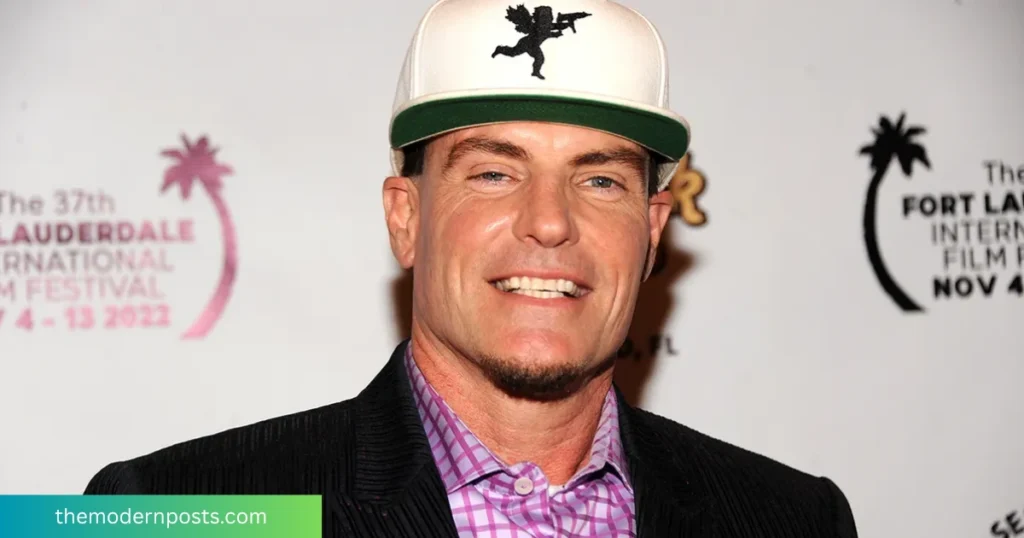
Vanilla Ice has long emphasized the importance of family alongside his career. He shares a close bond with his children, and fatherhood is something he has repeatedly credited with grounding him after the chaos of early fame. His daughter Dusti Rain Van Winkle, born in 1998, has pursued a more public path through modeling and real estate work. His younger daughter, KeeLee Breeze Van Winkle, born in 2000, has taken the opposite approach, deliberately staying out of the public eye and maintaining a private, low-profile lifestyle. He also has a younger daughter, Priscilla Love Van Winkle, born in 2008 from a later relationship, whom he has occasionally featured in family updates shared on social media.
A Private Family Amid Public Fame
Despite decades in the spotlight, Van Winkle has made deliberate efforts to shield his children from the pressures of celebrity culture. This balance between public career and private family life is something he has spoken about in interviews, describing fatherhood as one of the most transformative experiences of his adult life. His approach reflects a broader pattern seen among many long-tenured celebrities: prioritizing normalcy at home even while maintaining an active public career, a strategy that appears to have shaped a close-knit, loyal family dynamic among his children.
Legacy and Cultural Impact
More than three decades after “Ice Ice Baby” first topped the charts, Vanilla Ice’s cultural relevance has proven remarkably durable. His story is frequently referenced in discussions about one-hit wonders who defied expectations, reinvented their careers, and built lasting financial security. Music historians continue to credit him with helping pave the way for future white artists in hip-hop, while entertainment audiences know him equally well for his home renovation expertise. Few artists from his era have managed such a successful transition between industries, making his career trajectory a frequently cited example of adaptability in the entertainment business.
Continued Relevance in 2026
Vanilla Ice remains active in both music and television as of 2026. Reports note that <cite index=”14-2″>”Ice Ice Baby” has even seen renewed streaming attention in recent months</cite>, introducing the track to new generations of listeners through social media trends. Combined with his ongoing renovation projects and public appearances, Van Winkle continues to demonstrate that his career, now spanning more than 35 years, is far from over.
Conclusion
Vanilla Ice’s journey from a chaotic Dallas childhood to global rap stardom, public backlash, and an unexpected real estate empire is one of the more compelling reinvention stories in modern pop culture. Robert Van Winkle turned a single breakout hit into a lasting career, proving that resilience and adaptability can outlast even the harshest public scrutiny. Whether remembered for “Ice Ice Baby,” his film cameos, or his renovation projects on “The Vanilla Ice Project,” his influence on both music and television remains undeniable. As he continues building his real estate ventures and engaging new audiences in 2026, Vanilla Ice’s story stands as a genuine testament to reinvention, resilience, and long-term financial savvy.
Frequently Asked Questions (FAQs)
1. What is Vanilla Ice’s real name? His legal name is Robert Matthew Van Winkle.
2. When and where was Vanilla Ice born? He was born on October 31, 1967, in Dallas, Texas.
3. What is Vanilla Ice’s net worth in 2026? His net worth is estimated at approximately $25 million, largely built through real estate investments rather than music royalties alone.
4. What is Vanilla Ice’s most famous song? His signature hit is “Ice Ice Baby,” the first hip-hop single to top the Billboard Hot 100.
5. What TV show made Vanilla Ice famous again? “The Vanilla Ice Project,” which aired on the DIY Network from 2010 to 2019, reintroduced him to audiences as a home renovation expert.
6. Does Vanilla Ice have children? Yes, he has three daughters: Dusti Rain Van Winkle, KeeLee Breeze Van Winkle, and Priscilla Love Van Winkle.
7. Is Vanilla Ice still making music? Yes, he remains active in music, and his classic hits continue to see renewed streaming interest in 2026.