
Dorothy Comingore remains one of Hollywood’s most fascinating and tragic figures. Best remembered for her unforgettable portrayal of Susan Alexander Kane in Orson Welles’s masterpiece Citizen Kane (1941), she seemed destined for lasting stardom. Yet within a decade, her promising career collapsed under the weight of political persecution during the Hollywood blacklist era. This article explores the complete life story of Dorothy Comingore, from her early years and rise to fame to her devastating fall and quiet final chapter. Her story is not just about a single iconic film role — it is a powerful reminder of how politics, fame, and personal struggle intertwined during Hollywood’s Golden Age.
Who Was Dorothy Comingore?
Dorothy Comingore was an American stage and film actress born Margaret Louise Comingore on August 24, 1913. She became internationally recognized for playing the fictional opera singer Susan Alexander Kane, the second wife of newspaper tycoon Charles Foster Kane, in Citizen Kane. Before achieving this breakthrough, she worked under two different stage names, Kay Winters and Linda Winters, appearing in minor film and radio roles. Her transformation from an obscure supporting actress into a critically acclaimed lead performer marked one of the most dramatic career shifts in classic Hollywood cinema, making her story an essential part of film history discussions even today.
Early Life and Family Background
Born in California, Dorothy Comingore grew up in a household shaped by strong political and civic values. Her father worked as an electrotyper, a profession tied closely to the printing industry, while her sister Lucille later ran a nightclub in San Francisco. Comingore herself attended the University of California, Berkeley, where she developed early interests in performance and public expression. Friends and colleagues later noted that her family’s involvement in civil rights and labor causes shaped her own political consciousness, a trait that would later play a significant role in the personal and professional battles she faced during the anti-Communist hysteria of the 1950s.
Discovery Through Community Theater
Long before Hollywood came calling, Dorothy Comingore performed with the Carmel Little Theater in Monterey County, California. It was here that she was reportedly noticed by legendary silent film star Charlie Chaplin, whose praise helped open early doors in the film industry. Although Comingore later downplayed claims that she was Chaplin’s protégé, the encounter proved pivotal, sparking her serious interest in film acting. Through a Hollywood agent connection made via a friend at the Carmel theater, she secured a screen test that eventually led to a studio contract, setting her on the path toward a career in motion pictures.
Early Hollywood Roles as Linda Winters
Before adopting her professional name, Dorothy Comingore appeared in numerous minor and uncredited film roles under the alias Linda Winters between 1938 and 1940. During this period, she worked with Warner Bros. and later Columbia Pictures, taking on small parts in westerns, comedy shorts, and B-movies, including several Three Stooges productions. Much of this early work involved little more than background appearances or brief walk-on roles. Frustrated by being underutilized, especially after being reduced to publicity stills and clothes modeling at Warner Bros., she walked away from restrictive contracts, determined to be recognized as a serious actress rather than a decorative studio asset.
The Breakthrough Role: Susan Alexander Kane
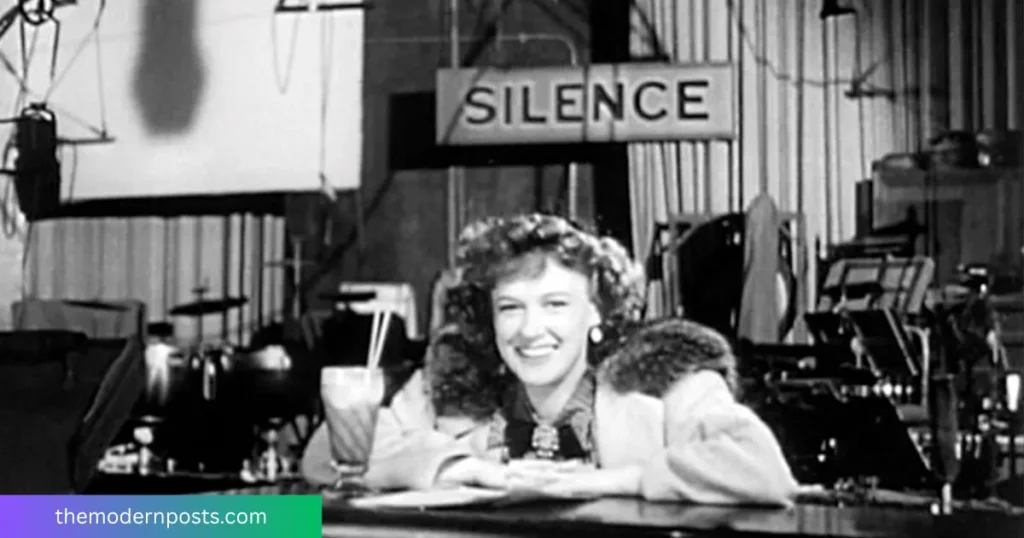
Everything changed when Dorothy Comingore was introduced to director Orson Welles at a social gathering. Welles immediately envisioned her as the ideal choice to play Susan Alexander Kane, a brash, insecure singer thrust into fame by a powerful but controlling husband. After a successful screen test, she won the role in Citizen Kane (1941), a film now widely regarded as one of the greatest ever made. This casting decision permanently linked her name to cinematic history and gave her the opportunity to demonstrate a level of emotional depth rarely offered to actresses working in minor studio roles at the time.
Critical Acclaim for Citizen Kane
The release of Citizen Kane brought Dorothy Comingore overwhelming praise from critics. The Los Angeles Times called her performance an important acquisition for the industry, while The Hollywood Reporter noted that she was put through an extraordinary range of emotions without ever faltering. Her nuanced portrayal captured the psychological unraveling of a woman trapped by ambition and control, giving the film emotional weight beyond its technical brilliance. Many expected her to be considered for major industry honors following this performance, and for a brief period, it appeared that stardom was finally within reach for the talented young actress.
Acting Style and On-Screen Presence
What set Dorothy Comingore apart from many contemporaries was her naturalistic, emotionally grounded acting style, which felt ahead of its time. Rather than relying purely on theatrical exaggeration common in that era, she conveyed complex emotional arcs through subtle facial expressions and body language. In Citizen Kane, audiences could trace Susan Alexander’s transformation from a hopeful young performer into a disillusioned, broken woman almost entirely through Comingore’s physical performance. This authentic, lived-in approach to character work distinguished her performance and remains a key reason why film scholars continue to study her portrayal decades later.
Career Choices After Citizen Kane
Despite the critical success of Citizen Kane, Dorothy Comingore’s subsequent career decisions proved costly. According to filmmaker Peter Bogdanovich’s commentary on the film, she turned down several roles she considered uninteresting, including a part that eventually went to Lucille Ball in The Big Street (1942). She also declined assignments such as Unexpected Uncle (1941) and Valley of the Sun (1942), which resulted in a suspension from RKO Pictures. While her selectiveness reflected artistic integrity, it also limited the momentum she had built, preventing her from capitalizing fully on the attention generated by her breakout performance.
Later Film Roles and Career Decline
Following Citizen Kane, Dorothy Comingore appeared in a handful of additional films, including the 1944 adaptation of Eugene O’Neill’s The Hairy Ape, alongside William Bendix and Susan Hayward. She also appeared in Any Number Can Play (1949). However, none of these later roles matched the impact of her earlier success. Her final film credit came in The Big Night (1951), a modest drama that marked the end of her on-screen acting career. Around this same period, political tensions in Hollywood were intensifying, setting the stage for the personal and professional crisis that would soon consume her life entirely.
The Hollywood Blacklist Era Begins
The early 1950s marked a dark turning point for many entertainment professionals, and Dorothy Comingore was no exception. As the House Un-American Activities Committee (HUAC) intensified its investigations into alleged Communist influence in Hollywood, actors, writers, and directors faced mounting pressure to testify and identify colleagues with political affiliations. Comingore, known for supporting civil rights and labor causes, became an easy target for suspicion. Her associations, real or exaggerated, made her vulnerable to public accusations that would ultimately end her acting career and dramatically reshape the trajectory of her personal life.
William Randolph Hearst’s Retaliation
Much of the backlash Dorothy Comingore experienced can be traced back to media mogul William Randolph Hearst, who was infuriated by her portrayal of a character widely believed to be modeled on his companion, Marion Davies. Hearst used his extensive newspaper and radio empire to publicly discredit Comingore, enlisting powerful columnists Hedda Hopper and Walter Winchell to accuse her of Communist Party membership. Although no verified evidence supported these claims, the accusations spread widely and irreparably damaged her professional reputation, illustrating how media influence could be weaponized against outspoken performers during this politically charged era.
Testimony Before HUAC in 1952
In 1952, Dorothy Comingore was called before the House Un-American Activities Committee. Rather than cooperating or naming other individuals as Communist sympathizers, she refused to answer many of the committee’s questions, a decision that classified her as an “unfriendly witness.” This stance, while principled, came at enormous personal cost. Refusing to comply effectively sealed her blacklisting from major studio productions, cutting off nearly all future acting opportunities. Her defiance stood in stark contrast to other Hollywood figures of the time who chose cooperation to preserve their careers, highlighting the moral complexity of the blacklist period.
The Bitter Custody Battle
Compounding her professional troubles, Dorothy Comingore became embroiled in a highly publicized custody dispute with her ex-husband, screenwriter Richard J. Collins. Collins, a former Communist Party member himself, testified before HUAC and named more than twenty former colleagues, a cooperative stance that helped protect his own career. During the custody proceedings, Comingore’s alleged political associations were used against her, alongside claims that she was an unfit mother. Ultimately, Collins won custody of their children, a devastating personal loss that arrived at the same moment her professional life was falling apart entirely.
Struggles With Alcoholism and Arrest
Following the collapse of her career and custody battle, Dorothy Comingore’s personal struggles deepened considerably. She battled alcoholism, which further strained her relationships and reputation. In October 1952, she was arrested on a solicitation charge, an incident she later described as another consequence of being labeled an unfriendly witness. To resolve the charges, she agreed to commitment at Camarillo State Mental Hospital, where she remained for approximately two years. This period represented one of the lowest points of her life, reflecting how thoroughly the blacklist experience had unraveled both her career and personal stability.
Life After Hollywood
After her release, Dorothy Comingore largely withdrew from public life. She eventually settled into a quiet existence away from the entertainment industry, reportedly living in Connecticut with her husband, described in some accounts as working an ordinary profession far removed from show business. Surrounded by pets and a modest domestic life, she chose privacy over any attempt to reclaim her former fame. Various sources note she later married John Crowe, and the couple remained together until her death, marking a peaceful, if largely undocumented, final chapter following years of public scrutiny and hardship.
Death and Final Years
Dorothy Comingore passed away on December 30, 1971, in Stonington, Connecticut, at the age of 58, reportedly due to complications from pulmonary illness. Her later years remain relatively undocumented compared to her dramatic rise and fall in Hollywood, as she intentionally avoided the public spotlight. Despite the quiet nature of her final decades, her earlier contributions to cinema, particularly her landmark performance in Citizen Kane, ensured that her legacy endured well beyond her lifetime, continuing to resonate with film historians, scholars, and classic cinema enthusiasts across generations.
Legacy and Influence on Film History
Today, Dorothy Comingore is remembered as a symbol of both extraordinary talent and the devastating human cost of the Hollywood blacklist. Her performance in Citizen Kane continues to be studied in film schools and referenced in discussions about the greatest achievements in American cinema. Beyond her artistic contribution, her story serves as a cautionary chapter in Hollywood history, illustrating how political persecution could dismantle even the most promising careers. Scholars and journalists, including researchers examining the broader HUAC era, frequently cite her experience when discussing the intersection of politics, media power, and the entertainment industry.
Why Dorothy Comingore’s Story Still Matters Today
The story of Dorothy Comingore resonates far beyond classic film enthusiasts. Her experience highlights ongoing conversations about press influence, political persecution, and the fragile nature of fame within any creative industry. As modern audiences revisit Citizen Kane for its technical brilliance, many are now equally drawn to the real-life drama behind Susan Alexander Kane’s performer. Her life illustrates how personal conviction, media manipulation, and political climate can permanently alter individual destinies, making her biography a compelling case study in both film history and twentieth-century American political culture.
Conclusion
Dorothy Comingore’s journey from a promising Berkeley student to an internationally celebrated actress, and ultimately to a blacklisted victim of political persecution, remains one of Hollywood’s most compelling true stories. Her unforgettable performance in Citizen Kane secured her a permanent place in cinematic history, even as personal and political turmoil cut her career tragically short. Rather than fading into obscurity, her legacy has grown over time, serving as both an artistic touchstone and a sobering historical lesson. For anyone exploring the human side of Hollywood’s Golden Age, Dorothy Comingore’s story offers a powerful reminder of resilience, principle, and the lasting cost of political persecution in the entertainment industry.
Frequently Asked Questions (FAQs)
1. What is Dorothy Comingore best known for? She is best known for playing Susan Alexander Kane in Orson Welles’s 1941 classic Citizen Kane, widely considered one of the greatest films ever made.
2. Why did Dorothy Comingore’s career end? Her career ended primarily due to the Hollywood blacklist, after she refused to cooperate with HUAC in 1952 and faced sustained media attacks tied to alleged Communist affiliations.
3. Was Dorothy Comingore actually a Communist Party member? According to multiple historical accounts, Comingore was never a verified, dues-paying member of the Communist Party, despite widespread public accusations at the time.
4. What name did Dorothy Comingore use before becoming famous? Before her breakthrough, she performed under the stage names Kay Winters and later Linda Winters in minor film and radio roles.
5. How did Dorothy Comingore’s custody battle affect her life? She lost custody of her children to ex-husband Richard J. Collins after political accusations were used to portray her as an unfit mother during their legal dispute.
6. When did Dorothy Comingore pass away? She died on December 30, 1971, in Stonington, Connecticut, at the age of 58.
7. Did Dorothy Comingore appear in any other notable films besides Citizen Kane? Yes, she also appeared in The Hairy Ape (1944), Any Number Can Play (1949), and her final film role in The Big Night (1951).