
Bernadette Protti is a name that remains tied to one of the most talked-about true-crime cases to come out of suburban California in the 1980s. As a 15-year-old student at Miramonte High School in Orinda, California, Protti murdered her classmate, popular cheerleader Kirsten Costas, in June 1984. The case shocked a quiet, affluent community, sparked a six-month manhunt, and later inspired a made-for-TV movie. Decades later, people still search for details about Bernadette Protti, her background, her trial, and what happened to her after her release. This article walks through the complete, verified story of Bernadette Protti — from her early life to the lasting cultural impact of the case.
Who Is Bernadette Protti?
Bernadette Protti is an American woman best known for killing her 15-year-old classmate, Kirsten Costas, in June 1984. At the time, Protti was also 15 years old and attended the same high school as her victim. The two were loosely connected through a school social group, though they were not close friends. Protti’s case became notable not just for the crime itself, but for the six-month investigation that followed, the media frenzy in the small town of Orinda, and the eventual made-for-television dramatization of the events. Today, Bernadette Protti is remembered primarily through true-crime documentaries, archival news coverage, and continued public fascination with the so-called “cheerleader murder.”
Early Life and Family Background
Bernadette Protti grew up in a middle-class household in the San Francisco Bay Area during the 1970s and early 1980s. She was raised in a devoutly religious family alongside several siblings, including older sisters. Reports from the time describe her as a polite, quiet, and somewhat reserved teenager who did not stand out dramatically among her peers. Unlike many of her wealthier classmates in Orinda, Protti’s family did not have the same level of financial comfort, and this difference reportedly contributed to feelings of insecurity during her teenage years. This social and economic gap would later be cited by prosecutors and reporters as part of the emotional backdrop to the crime.
Growing Up in Orinda, California
Orinda was, and remains, an affluent suburban community east of San Francisco, known for good schools and a low crime rate. Growing up there placed Bernadette Protti among peers with more visible wealth and social status. Miramonte High School, which both Protti and Costas attended, had an active social scene built around clubs, sports teams, and school-affiliated groups. For a teenager already prone to feeling overlooked, this environment could feel intensely competitive. Understanding Orinda’s culture in the early 1980s helps explain why a seemingly minor social slight escalated into a case that captured national attention.
Bernadette Protti’s Family and Upbringing
Court records and later news profiles describe Protti’s home life as stable and loving, with parents who were shocked and devastated by their daughter’s actions. She had multiple siblings, and family members later testified during proceedings related to the case. One detail that became significant during the investigation was that an older sister kept kitchen knives in the family car, which Protti later referenced when explaining how she came to have a weapon with her on the night of the murder. This family background painted a picture, for many observers, of an ordinary teenager rather than someone predisposed to violence.
Bernadette Protti and Miramonte High School
At Miramonte High School,Bernadette Protti was a member of the same social circle as Kirsten Costas, though the two were not particularly close. Protti was involved in school activities and reportedly wanted to be seen as part of the more popular crowd. Costas, meanwhile, was a well-liked member of the cheerleading and swim teams. The dynamic between the two girls — one striving for acceptance, the other comfortably established socially — became a central theme in later coverage of the case, even though investigators and prosecutors were careful not to reduce the murder to a simple story of jealousy.
The Bob-O-Links Sorority and Teenage Rivalry
Much of the tension between Bernadette Protti and Kirsten Costas centered on the Bob-O-Links, a school-based social and service group sometimes described as sorority-like. Protti had reportedly hoped to be included in a related social circle, and competition for status within these groups added strain to her relationships. According to later testimony, Protti fabricated an invitation to a fictitious dinner event tied to this group as a way to spend time with Costas and build a friendship. This fabricated invitation would become the pretext that led directly to the tragic events of June 23, 1984.
The Murder of Kirsten Costas
On the evening of June 23, 1984, Bernadette Protti told her parents she was going babysitting and borrowed the family car. She had already arranged, through an anonymous phone call to Kirsten’s mother two days earlier, to have Kirsten ready for a supposed dinner event. When Protti arrived to pick her up, the two girls reportedly began to argue after Kirsten realized the invitation was not real. During the altercation, Protti fatally stabbed Kirsten multiple times. Kirsten managed to make her way to a neighbor’s porch seeking help before she died. The murder devastated the Orinda community and triggered an intense police investigation.
The Fake Dinner Invitation
The fabricated invitation is one of the most chilling details of the Bernadette Protti case. By calling Kirsten’s mother anonymously and asking her to keep the event a secret, Protti created a plausible cover story that avoided suspicion until the night of the murder itself. This premeditated element — arranging transportation, timing, and secrecy — became a key point of contention during the later trial, as prosecutors argued it demonstrated planning, while the defense maintained the killing itself was not intended.
The Night of June 23, 1984
Court testimony later established that Protti brought a knife in the car, which she claimed belonged to her sister and was used for cutting vegetables. When Kirsten confronted her about the false invitation, the confrontation turned violent. Kirsten fled to a nearby home for help but succumbed to her injuries. The exact sequence of events that night remained a focal point of the trial, since Protti’s account of an unplanned, emotional outburst conflicted with the prosecution’s theory of a more calculated act.
The Six-Month Police Investigation
Following the murder, Orinda police launched an extensive investigation that lasted approximately six months before an arrest was made. Detectives worked from a single eyewitness account describing a blonde teenage girl driving a gold Pinto near the crime scene. This description led to intense public speculation, and several innocent young women in the community were wrongly suspected or harassed by rumors during the search. The case remained unsolved for months, frustrating both investigators and the grieving Costas family, until new evidence and further questioning pointed detectives toward Bernadette Protti.
The Search for the “Blonde Girl in a Gold Pinto”
The eyewitness description became the defining clue of the investigation, circulating widely throughout the small community. It generated significant anxiety among Orinda residents, many of whom knew families with daughters matching the general description. The intense scrutiny placed on innocent teenagers during this period is often cited in retrospective coverage of the case as an example of how small-town rumor mills can cause real harm even before an arrest is made. Eventually, investigative work — rather than the original eyewitness lead alone — led police to Bernadette Protti months later.
Bernadette Protti’s Arrest and Confession
Bernadette Protti was arrested in December 1984, roughly six months after Kirsten Costas’s murder. Upon questioning, she confessed to the killing, providing investigators with her account of the events leading up to the stabbing. Her confession detailed the fake invitation, the argument, and the stabbing, though she maintained that she had not planned to kill Kirsten that night. This confession became central evidence in the case that followed and shaped how prosecutors approached the charges against her, given her age and the circumstances she described.
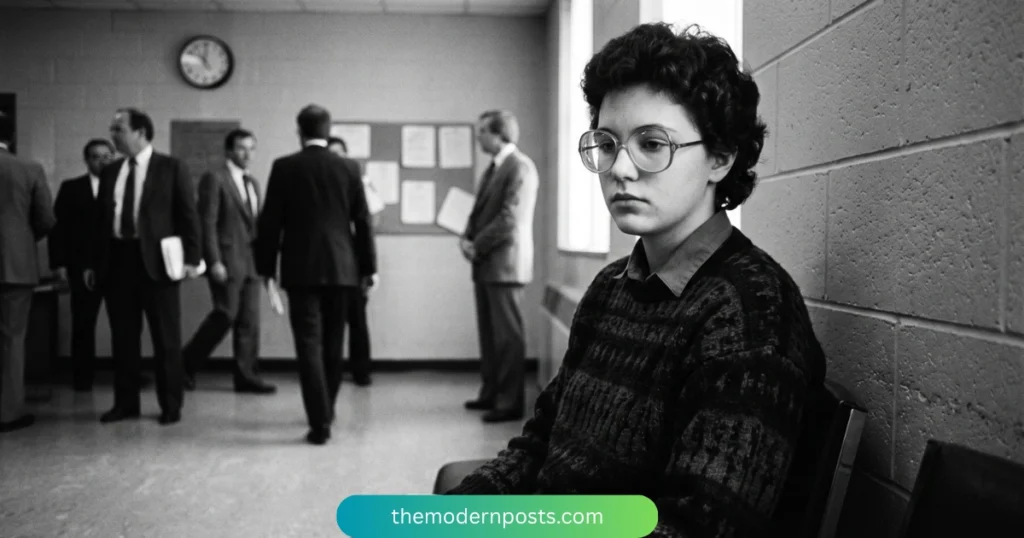
The Trial: Bernadette Protti in Court
Because she was 15 years old at the time of the murder, Bernadette Protti was tried as a juvenile, with proceedings taking place in early 1985. During the trial, she did not deny killing Kirsten Costas but argued the act did not amount to premeditated, first-degree murder. Her defense emphasized her account of an impulsive, emotionally charged confrontation rather than a planned execution. Prosecutors pushed back, pointing to the elaborate false invitation and secretive planning as evidence of premeditation, setting up a legal battle over intent and degree of culpability.
Second-Degree Murder Conviction
In March 1985, Bernadette Protti was convicted of second-degree murder, rather than the first-degree charge prosecutors had sought. The court determined that while the killing was intentional, the evidence did not sufficiently establish the level of premeditation required for a first-degree conviction. This outcome disappointed the Costas family, who felt the planning involved in luring Kirsten to her death warranted a harsher classification. The verdict remains a frequently discussed aspect of the case among legal commentators examining how premeditation is proven in juvenile murder trials.
Sentencing and the California Youth Authority
Bernadette Protti received the maximum sentence available under her conviction: nine years in the custody of the California Youth Authority. Kirsten’s mother, Berit Costas, expressed profound grief following the sentencing, reportedly saying her heart felt empty. Protti was ultimately paroled after serving approximately seven years, a decision that drew strong criticism from the Costas family, who felt it did not reflect the severity of the crime. The sentencing and parole outcome continue to be referenced in discussions about how the juvenile justice system handles serious violent crimes committed by minors.
Reaction from the Costas Family
The Costas family’s grief and frustration shaped much of the public narrative around the case. They were vocal about their belief that the sentence, and later the parole decision, did not deliver adequate justice for their daughter’s death. Their statements to media outlets at the time humanized Kirsten beyond the “cheerleader murder” headline, reminding the public of the teenager whose life was cut short. Their advocacy also contributed to broader conversations in California about sentencing standards for juvenile offenders convicted of violent crimes, an issue that remained relevant in later state policy discussions.
Life After Release: Where Is Bernadette Protti Now?
After her release from the California Youth Authority, Bernadette Protti largely disappeared from public view. Various unverified reports and online forums have speculated over the years about a possible name change and a quiet life away from California, but no independently confirmed, reliable source has verified her current identity, location, or occupation. This lack of confirmed information is consistent with how many juvenile offenders’ records and post-release identities are legally protected. Out of respect for privacy and factual accuracy, this article does not present unverified rumors about her present-day life as established fact.
Death of a Cheerleader: The Movie Based on the Case
The Bernadette Protti case inspired the 1994 television movie “Death of a Cheerleader”, also released under the title “A Friend to Die For,” starring Tori Spelling. The film dramatized the murder and investigation, changing the real names of those involved while closely following the broad outline of events. Journalist Randall Sullivan’s original reporting on the Orinda community and the murder served as source material for the production. The movie introduced the case to a much wider national audience and remains one of the primary reasons the story continues to attract new interest decades later.
Bernadette Protti in Popular Culture and True Crime Media
Beyond the television movie, the case has resurfaced repeatedly in true-crime programming, including Investigation Discovery features that revisit the murder as part of retrospectives on notable crimes of the 1980s. These programs typically interview investigators, community members, and sometimes individuals wrongly suspected during the original manhunt. The enduring interest reflects a broader fascination with cases involving teenage perpetrators, small-town settings, and social dynamics like popularity and exclusion. Bernadette Protti’s story is frequently cited alongside other cases exploring the darker side of adolescent social competition.
Why the Bernadette Protti Case Still Resonates
Decades after the murder, the case continues to draw attention because it challenges assumptions about who commits violent crime. Bernadette Protti did not fit typical profiles associated with murder suspects at the time — she was a quiet, seemingly unremarkable teenage girl from a loving family. This contrast between her outward normalcy and the violence of her actions unsettled the Orinda community and continues to unsettle audiences today. The case also raises enduring questions about adolescent mental health, social pressure, and how communities respond when trusted assumptions about “safe” neighborhoods are shattered by tragedy.
Lessons from the Bernadette Protti Case
The Bernadette Protti case offers several points of reflection for parents, educators, and communities. It highlights how intensely teenagers can experience social exclusion and how unresolved emotional distress can, in rare and extreme cases, escalate dangerously. It also illustrates the risks of public speculation during unsolved investigations, given how innocent young women were wrongly suspected before Protti’s arrest. Finally, the case remains a reference point in discussions about how the justice system should balance accountability with the recognition that the offender was herself a minor at the time of the crime.
Conclusion
The story of Bernadette Protti remains one of the most memorable true-crime cases to emerge from suburban California, not because of a shocking mystery, but because of how ordinary and quiet the circumstances leading up to the murder seemed on the surface. From the fabricated dinner invitation to the six-month manhunt and the juvenile trial that followed, the case of Bernadette Protti and Kirsten Costas continues to be studied, dramatized, and discussed nearly forty years later. While much of Protti’s life after her release remains unconfirmed publicly, the documented facts of the case still offer a sobering look at how teenage insecurity, social pressure, and a single violent night can leave a permanent mark on a community.
Frequently Asked Questions About Bernadette Protti
1. Who is Bernadette Protti? Bernadette Protti is an American woman who, at age 15, murdered her classmate Kirsten Costas in Orinda, California, in June 1984.
2. Why did Bernadette Protti kill Kirsten Costas? Reports suggest the killing followed a confrontation after Costas realized Protti had lied about a dinner invitation, with underlying tensions tied to social status and a school social group.
3. How long was Bernadette Protti in prison? She was sentenced to nine years in the custody of the California Youth Authority and was paroled after approximately seven years.
4. Was Bernadette Protti tried as an adult? No. Because she was 15 at the time of the crime, she was tried as a juvenile in early 1985.
5. What movie was based on the Bernadette Protti case? The 1994 television movie “Death of a Cheerleader” (also known as “A Friend to Die For”), starring Tori Spelling, was based on the case.
6. Where is Bernadette Protti now? Her current whereabouts and identity are not independently verified in reliable public records; online claims about her present life remain unconfirmed.
7. What was Bernadette Protti convicted of? She was convicted of second-degree murder in March 1985, after prosecutors’ push for a first-degree murder charge was rejected by the court.